PackageMaven - building something quietly, and why it still matters
· 4 min read
PackageMaven is a project I've been quietly building on the side of my day-to-day work.
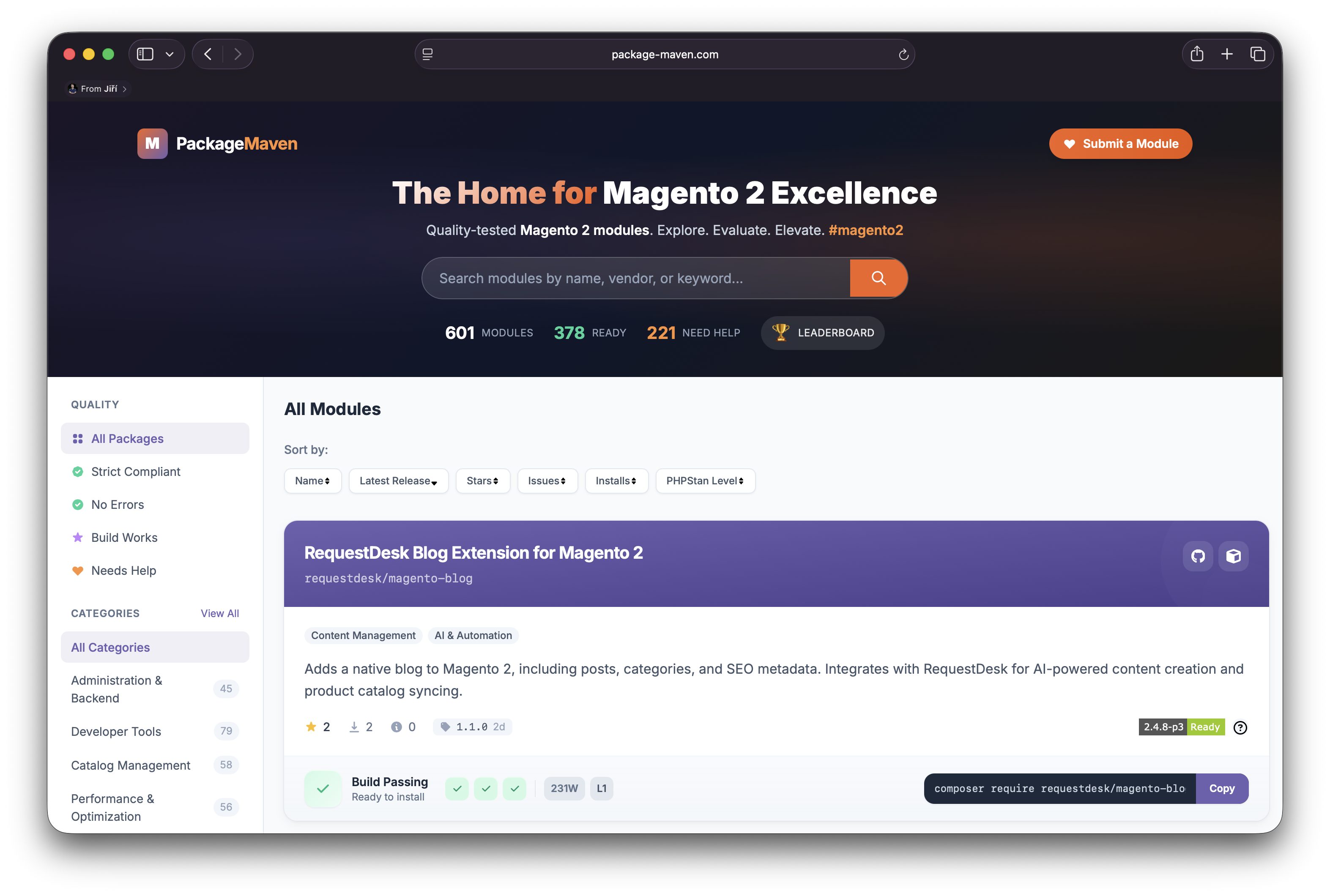
At its core, it's a directory. Something I've felt has been missing in the Magento world for a long time. A single place that brings Magento 2 open-source modules together, adds a bit of structure, and makes choosing a module slightly less of a gamble.
For readers outside the Magento ecosystem: Magento 2 provides a solid foundation out of the box, but real-world stores almost always need additional modules to handle project-specific requirements or integrations.
The idea behind PackageMaven was simple:
- list Magento 2 open-source modules in one place
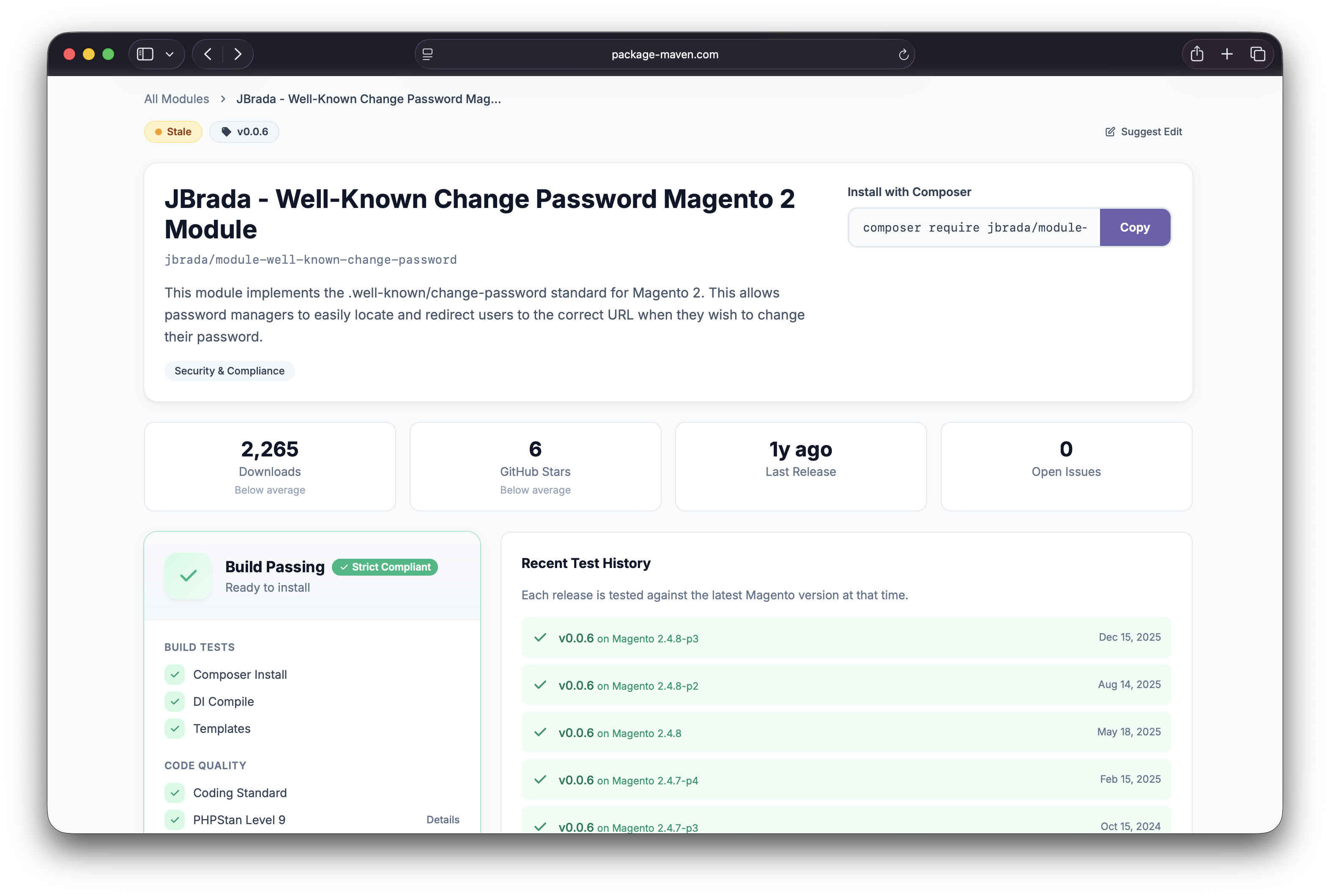
- automatically check whether they're compatible with the latest Magento version
- run basic static analysis against widely adopted Magento coding standards (here's an example of what that looks like)
Nothing revolutionary. Just useful signals, surfaced in one place.
Motivation dips
To be honest, this year I struggled a bit with motivation around the project. PackageMaven didn't gain much traction, and it's always harder to keep pushing when something stays quiet for a long time.
Towards the end of the year, with AI coding assistants becoming part of everyday development, I decided to iterate on it anyway. Not because I had to. Because I wanted to.
Mostly during December, I spent some evenings tidying things up and pushing the project forward.
What changed
Over that period, I managed to:
- refine the overall design
- improve the testing agent (the part that installs Magento 2 modules, runs checks, and reports results back to the app)
- import almost the entire Magento 2 module ecosystem into PackageMaven (I'm still in the process of reviewing it)
- create a LinkedIn page for the project to give it at least some public presence
- add a simple categorising system for modules
- add support for Hyva related modules
None of this was planned as a big release. It was just incremental improvement - the kind that happens when you care about a thing and keep coming back to it.
A better direction - people, not just packages
While working on this, I realised there was an even more interesting direction to explore.
There is no Magento ecosystem without developers.
And I had this lingering feeling that many developers and their modules are simply not very visible. Some projects get traction because they're backed by companies or shared by well-known community figures. Others quietly solve real problems and remain largely unnoticed.
A reliable directory of Magento 2 modules is one thing. A way to highlight the people behind them is another.
That's where the idea of a community leaderboard came from.

Tracking contributions at ecosystem scale
PackageMaven can now track activity across all packages declared as:
"type": "magento2-module"
This makes it possible to analyse contribution data across the entire Magento 2 open-source module ecosystem and surface it in a meaningful way.
And honestly - analysing it was genuinely interesting.
I discovered many hidden gems and realised that over 2,000 people contributed to Magento 2 open-source modules in 2025. That's a huge number of individuals quietly maintaining, fixing, and improving the building blocks many online stores rely on every day.
Publicly recognising these contributors felt like a natural next step.
Looking ahead
From 2026 onwards, the Magento community can:
- celebrate top contributors every month
- browse their modules directly via PackageMaven
- discover projects that might otherwise stay under the radar
I'm quite sure I won't ever "win" that leaderboard myself. But I can help create something that supports the ecosystem and helps it grow.
Especially now, with all the hype around AI, one thing feels increasingly true:
Building something is relatively easy. Consistently maintaining it is the hard part.
And that's exactly the kind of work worth highlighting.